Media Cloud คืออะไร? ทำไมแพลตฟอร์มสื่อถึงย้ายจาก On-Premise สู่ Cloud
วันเสาร์ที่ 27 ธันวาคม พ.ศ. 2568
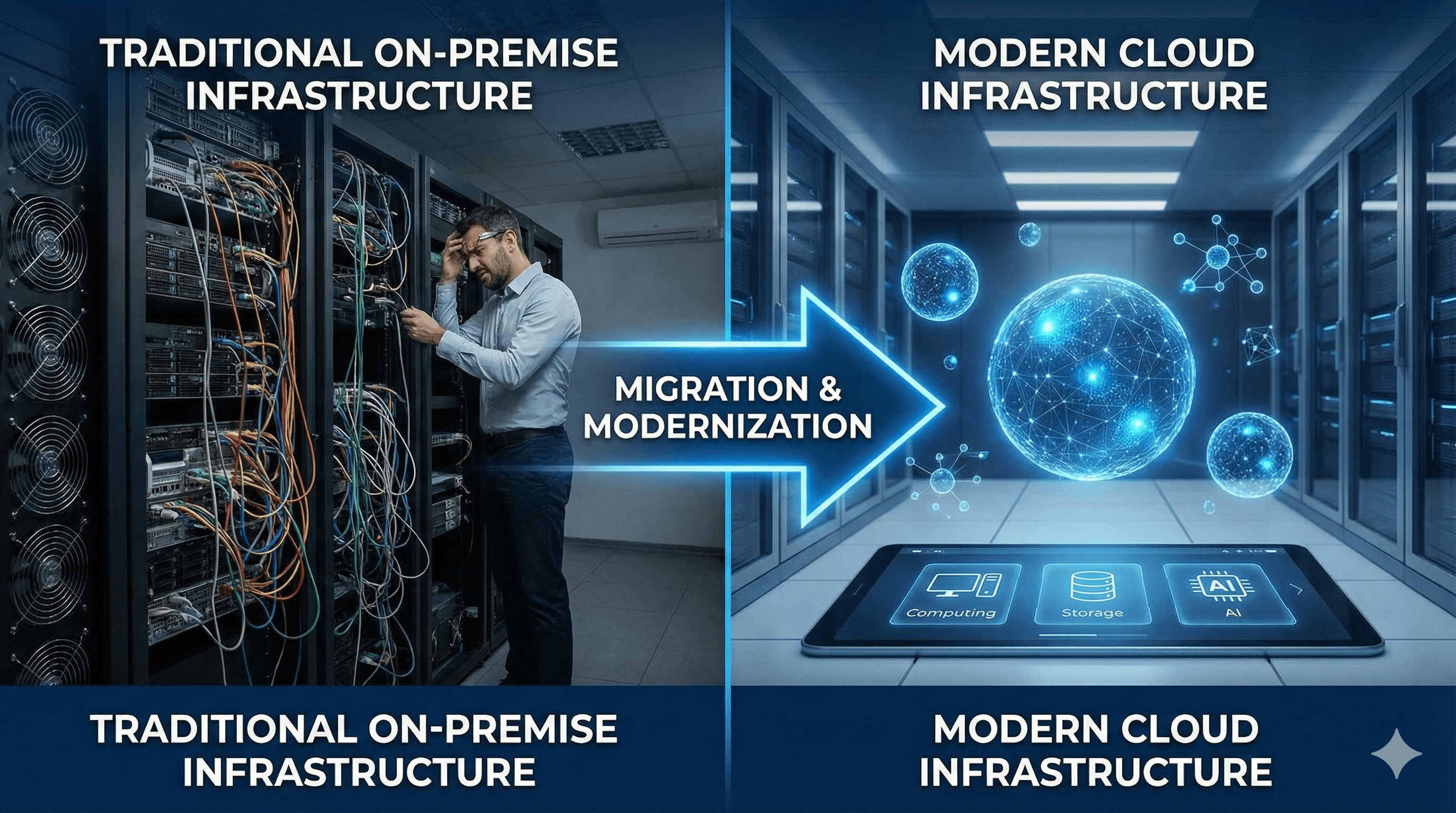
Media Cloud คืออะไร?
Media Cloud คือ cloud infrastructure ที่ออกแบบมาเฉพาะสำหรับงาน media และ video workloads ซึ่งแตกต่างจาก general cloud services ทั่วไป เพราะมี specialized services ที่จัดการกับความต้องการพิเศษของอุตสาหรรมสื่อ ไม่ว่าจะเป็น video transcoding, content delivery, live streaming, storage optimization และ DRM protection
สำหรับธุรกิจสื่อในไทย ไม่ว่าจะเป็น OTT platforms, broadcasters, หรือ content creators ที่กำลังเติบโต คำถามที่พบบ่อยคือ "ควรจะลงทุนสร้าง infrastructure เอง (on-premise) หรือใช้ cloud solutions?" คำตอบไม่ได้ขาวดำเสมอไป แต่เทรนด์ที่เห็นชัดเจนคือ แพลตฟอร์มสื่อส่วนใหญ่กำลังเลือกที่จะย้ายไปใช้ Media Cloud
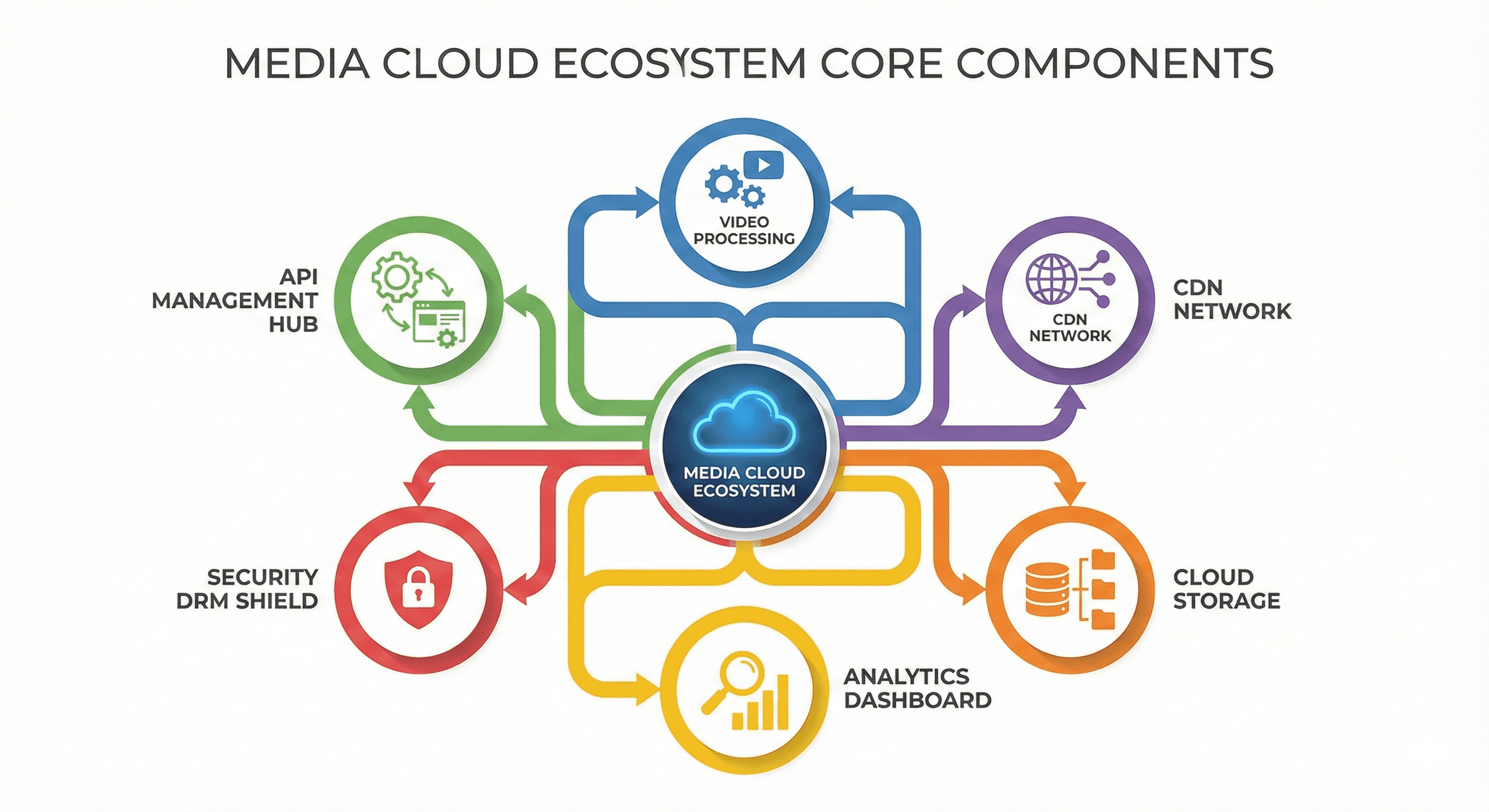
[Image Placeholder 1: Infographic - Media Cloud Components]
แนวคิด: Diagram แสดง core components ของ Media Cloud ecosystem
ควรมี: Video Processing, CDN, Storage, Analytics, Security/DRM, API Management
AI Prompt: "Clean infographic diagram showing media cloud ecosystem with 6 main components: video processing, CDN network, cloud storage, analytics dashboard, security DRM shield, and API management hub, connected with flowing lines, modern flat design, professional color scheme"
ปัญหาของ On-Premise Infrastructure ที่แพลตฟอร์มสื่อเจอ
1. CapEx สูงและความเสี่ยงทางการเงิน
การสร้าง on-premise infrastructure ต้องการ capital expenditure ก้อนใหญ่ตั้งแต่เริ่มต้น ตั้งแต่ servers, storage systems, networking equipment, ไปจนถึง cooling systems และ backup power สำหรับธุรกิจสื่อที่ต้องการ high-availability การลงทุนครั้งแรกอาจสูงถึงหลักสิบล้านบาท โดยที่ยังไม่รู้ว่าจะ scale ได้ตามที่ต้องการหรือไม่
2. Scalability ที่จำกัด
เมื่อมี content ที่ viral หรือมี live event ใหญ่ on-premise infrastructure มักจะ over-provision เพื่อรองรับ peak traffic แต่กลับ under-utilize ในช่วงปกติ หรือแย่กว่านั้นคือ under-provision แล้วเกิด service outage ในช่วงที่ viewers เยอะที่สุด
3. Technology Obsolescence
Video technology เปลี่ยนแปลงเร็วมาก codec ใหม่ๆ เกิดขึ้นเรื่อยๆ (H.265, AV1, VVC) streaming protocols พัฒนาไป (HLS, DASH, LL-HLS) hardware ที่ซื้อวันนี้อาจ outdated ในอีก 2-3 ปี การ upgrade on-premise systems ต้องใช้เวลาและต้นทุนสูง
4. Operational Complexity
การรัน media infrastructure ต้องการ specialized team ตั้งแต่ system administrators, network engineers, video engineers, security specialists ค่าใช้จ่าย OpEx จากทีมเหล่านี้บวกกับ maintenance, electricity, cooling อาจสูงกว่าที่คาดไว้
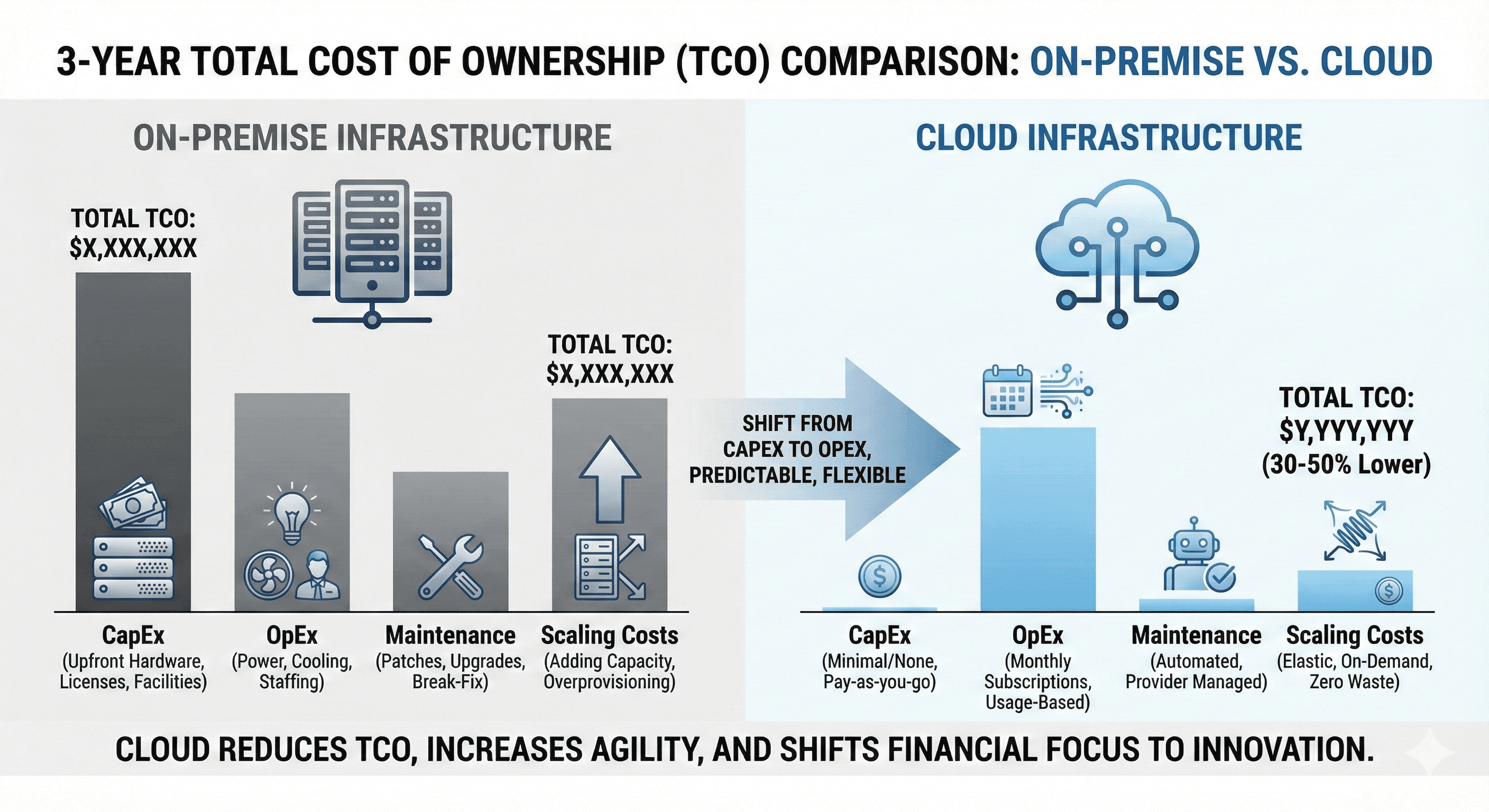
[Image Placeholder 2: Infographic - On-Premise vs Cloud TCO Comparison]
แนวคิด: Visual comparison ของ Total Cost of Ownership (TCO) ระหว่าง On-Premise และ Cloud ในช่วง 3 ปี
ควรมี: Breakdown ของ CapEx, OpEx, Maintenance, Scaling costs
AI Prompt: "Professional comparison chart showing 3-year TCO breakdown between on-premise and cloud infrastructure, bar charts comparing CapEx, OpEx, maintenance and scaling costs, clean business infographic style, blue and gray color scheme"
ทำความเข้าใจ TCO (Total Cost of Ownership) ของ Media Infrastructure
การเปรียบเทียบระหว่าง on-premise และ cloud ไม่ควรมองแค่ราคา infrastructure เพียงอย่างเดียว แต่ต้องดู Total Cost of Ownership (TCO) ในระยะยาว 3-5 ปี ซึ่งหลายองค์กรมักมองข้ามค่าใช้จ่ายที่ "ซ่อนอยู่" ในโมเดล on-premise
TCO ของ On-Premise Media Infrastructure
1. Capital Expenditure (CapEx)
ค่าใช้จ่ายเริ่มต้นที่ต้องจ่ายก่อนระบบจะพร้อมใช้งาน:
Hardware Costs: Servers สำหรับ transcoding (โดยเฉพาะถ้าต้องการ GPU acceleration อาจแพงขึ้นอีก 30-50%), storage arrays สำหรับ master files และ transcoded versions, networking equipment (switches, routers, load balancers)
Software Licenses: Video processing software, encoding/transcoding licenses, DRM systems, monitoring tools, backup solutions
Infrastructure Setup: Data center space rental (ถ้าไม่มีของตัวเอง), rack installation, cabling, power distribution units, cooling systems (CRAC/CRAH units)
Initial Testing: Hardware burn-in testing, system integration testing, performance benchmarking
ตัวอย่าง: แพลตฟอร์ม OTT ขนาดกลางที่ต้องการรองรับ 10,000 concurrent viewers อาจต้องลงทุนเริ่มต้น 15-25 ล้านบาท ขึ้นอยู่กับ redundancy requirements
2. Operating Expenditure (OpEx) - ค่าใช้จ่ายประจำ
Staffing Costs: เงินเดือนพนักงานที่ต้องใช้ในการดูแล on-premise infrastructure (฿50,000-80,000/คน/เดือน)
Facility Costs: Electricity (servers ใช้ไฟตลอด 24/7 บวก cooling ที่อาจใช้ไฟเท่ากับ servers เลย), Cooling and HVAC maintenance, Data center space rental (ถ้า co-locate) หรือ building costs (ถ้าเป็นของตัวเอง), Physical security
Maintenance & Support: Hardware maintenance contracts (10-15% ของราคา hardware ต่อปี), Software license renewals และ support contracts, Spare parts inventory, Emergency repairs
3. Hidden Costs ที่มักถูกมองข้าม
Opportunity Costs:
เงินที่ใช้ซื้อ infrastructure ไม่สามารถนำไปลงทุนใน content creation หรือ marketing
Engineering team ใช้เวลากับ infrastructure management แทนที่จะพัฒนา features ใหม่
Time-to-market ที่ช้าลง (setup on-premise อาจใช้เวลา 3-6 เดือน vs cloud ที่เริ่มได้ภายในวัน)
Over-Provisioning Waste:
ซื้อ capacity สำหรับ peak load แต่ utilization เฉลี่ยอาจแค่ 20-30%
ตัวอย่าง: ซื้อ infrastructure รองรับ 50,000 viewers แต่ใช้งานจริงเฉลี่ย 10,000 viewers = เสีย capacity 80%
Downtime Costs:
Revenue loss จาก service outage
Brand damage และ user churn
ตัวอย่าง: ถ้า downtime 1 ชั่วโมงในช่วง prime time อาจเสีย revenue หลักแสนถึงล้านบาท
Technology Refresh Cycles:
Hardware มี lifespan 3-5 ปี แล้วต้อง refresh
New codec standards ออกมา (เช่น AV1) อาจทำให้ hardware เก่า inefficient
Migration costs เมื่อต้อง upgrade major version
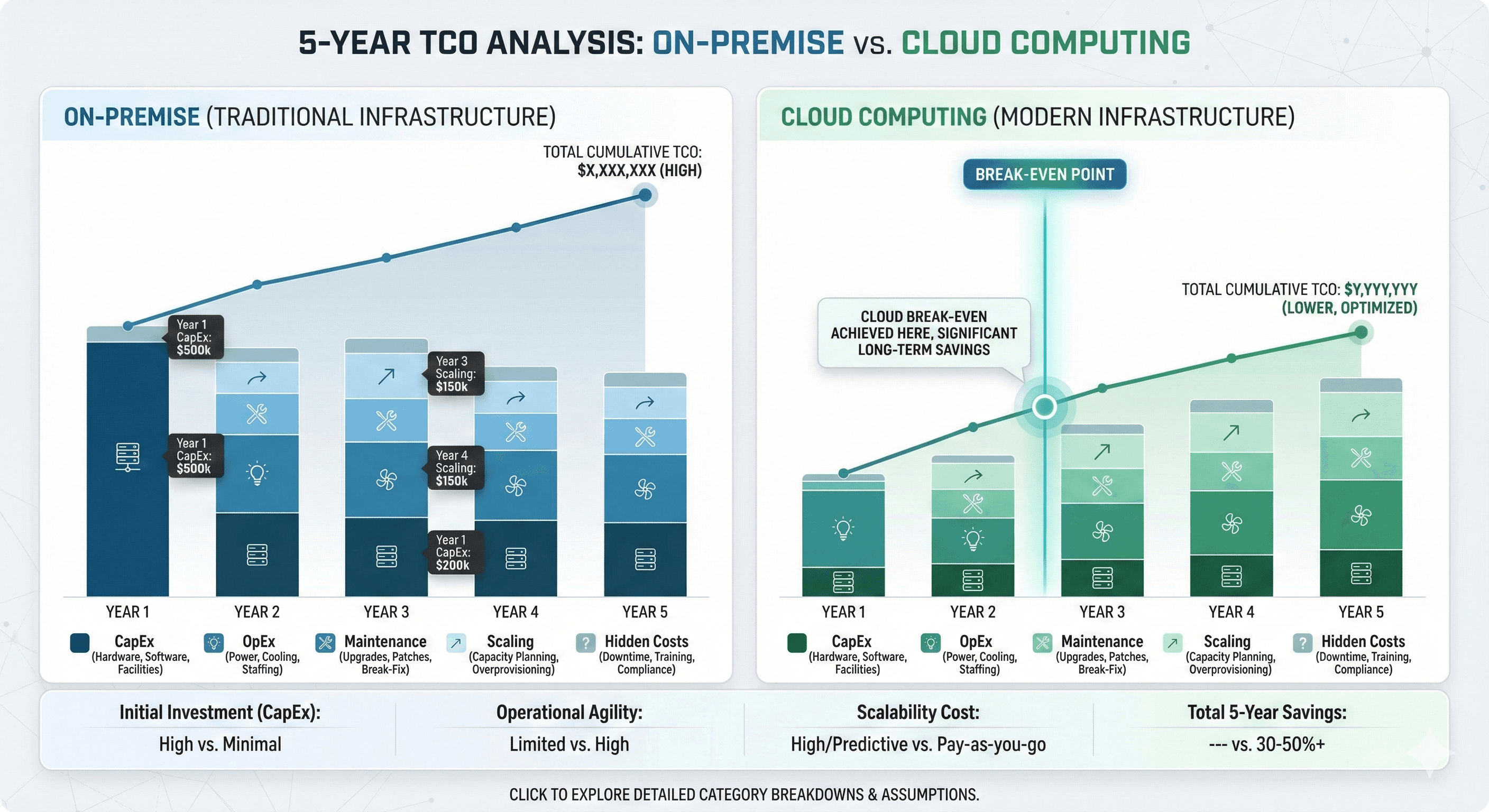
[Image Placeholder 3: Detailed TCO Comparison Chart]
แนวคิด: Interactive-style comparison chart แสดง TCO breakdown ของ On-Premise vs Cloud ในช่วง 5 ปี
ควรมี:
- Year-by-year cost projection
- Breakdown categories: CapEx, OpEx, Maintenance, Scaling, Hidden Costs
- Cumulative total cost line graph
- Highlight break-even point
AI Prompt: "Professional financial comparison chart showing 5-year TCO analysis, stacked bar charts for annual costs with categories (CapEx, OpEx, maintenance, scaling), cumulative cost line overlay, break-even point highlighted, corporate blue and green color scheme, clean modern design"
ทำไม Media Cloud ถึงเป็นทางออก
1. Pay-as-you-grow Model
แทนที่จะลงทุนล่วงหน้า Media Cloud ใช้โมเดล pay-as-you-go ธุรกิจจ่ายเฉพาะสิ่งที่ใช้จริง เมื่อ traffic เพิ่ม infrastructure ก็ scale ตาม เมื่อ traffic ลด ค่าใช้จ่ายก็ลดตาม cash flow management ทำได้ง่ายขึ้น
2. Global Scale, Regional Performance
Media Cloud providers มี CDN footprint ทั่วโลก สำหรับตลาดไทยและเอเชียตะวันออกเฉียงใต้ การเลือก provider ที่มี strong regional presence เป็นสิ่งสำคัญ เพราะ latency และ bandwidth costs ต่างกันมาก
3. Integrated Solutions
แทนที่จะต้องประกอบ infrastructure จากหลาย vendors Media Cloud platforms มักมี end-to-end solutions ตั้งแต่ video ingestion, transcoding, packaging, DRM, CDN delivery, และ analytics ในที่เดียว ลด complexity ในการ integrate
4. Continuous Innovation
Cloud providers อัพเดต services ใหม่ๆ อยู่เสมอ เมื่อมี codec ใหม่ออกมา ไม่ต้องซื้อ hardware ใหม่ แค่เปิดใช้งาน feature ใหม่
[Video Placeholder: Customer Story or Platform Demo]
แนวคิด: 2-3 นาที case study video ของแพลตฟอร์ม OTT ในไทยที่ migrate จาก on-premise ไป cloud
หรือ: Demo video แสดง workflow ของ Media Cloud platform (เช่น Tencent Media Cloud) ตั้งแต่ upload content จนถึง delivery
กรณีที่ยังควรพิจารณา On-Premise
ถึงแม้ Media Cloud จะมีข้อดีมากมาย แต่ก็มีบางกรณีที่ on-premise หรือ hybrid approach อาจเหมาะสมกว่า:
Regulatory Requirements: บางประเทศหรืออุตสาหรรมมี data sovereignty requirements ที่เข้มงวด
Existing Infrastructure Investment: ถ้าลงทุน on-premise infrastructure ไปแล้วและยัง depreciate ไม่หมด การ migrate ทั้งหมดอาจไม่ cost-effective
Specialized Workflows: workflow บางอย่างที่ต้องการ ultra-low latency หรือ custom hardware accelerators
สำหรับกรณีเหล่านี้ hybrid cloud approach อาจเป็นทางออกที่ดี ใช้ on-premise สำหรับงานที่จำเป็น และใช้ cloud สำหรับ scalability และ distribution
การเลือก Media Cloud Platform ที่เหมาะสม
เมื่อตัดสินใจ migrate ไป cloud แล้ว การเลือก platform ที่เหมาะสมเป็นสิ่งสำคัญ ปัจจัยที่ควรพิจารณา:
Regional Coverage: CDN presence ในเอเชียตะวันออกเฉียงใต้
Total Cost: ไม่ใช่แค่ระบบ transcoding แต่รวมถึง storage, bandwidth, API calls
Integration: API และ SDKs ที่ใช้งานง่าย documentation ที่ดี
Support: Local support team ที่เข้าใจตลาดและ timezone
Compliance: รองรับ standards และ regulations ที่จำเป็น
สำหรับตลาดไทยและเอเชียตะวันออกเฉียงใต้ platforms ที่มี strong regional presence มักให้ better performance และ lower egress costs เมื่อเทียบกับ global providers ที่ focus ที่ US/Europe
บทสรุป
การ migrate จาก on-premise สู่ Media Cloud ไม่ใช่แค่การเปลี่ยน technology แต่เป็นการเปลี่ยน business model จาก capital-intensive ไป operational-flexible ธุรกิจสื่อสมัยใหม่ต้องการความ agile เพื่อตอบสนอง market ที่เปลี่ยนเร็ว Media Cloud ทำให้เป็นไปได้
การตัดสินใจควรมาจากการวิเคราะห์ TCO ที่แท้จริง รวมถึง opportunity cost และ business agility ไม่ใช่แค่เปรียบเทียบราคา infrastructure เท่านั้น การเริ่มต้นอาจเป็น hybrid approach แล้วค่อยๆ migrate workloads ไปเรื่อยๆ ตามความพร้อม
"กำลังพิจารณา migrate ไป Media Cloud? ปรึกษาผู้เชี่ยวชาญของเราเพื่อวิเคราะห์ TCO และวางแผน migration strategy ที่เหมาะกับธุรกิจคุณ"