Low Latency Live Streaming: ทำไมความหน่วงถึงกระทบรายได้ และวิธีแก้ปัญหา
วันเสาร์ที่ 27 ธันวาคม พ.ศ. 2568

Live Streaming Latency คืออะไร? ทำไมถึงสำคัญกับธุรกิจสื่อ
ในยุคที่ Live Streaming กลายเป็นช่องทางสื่อสารหลักของธุรกิจ ไม่ว่าจะเป็นการถ่ายทอดสดกีฬา, Live Commerce, การแข่งขัน E-sports, หรือ Virtual Events ความล่าช้าในการส่งสัญญาณ (Latency) กลายเป็นปัจจัยสำคัญที่ส่งผลต่อประสบการณ์ผู้ชม และส่งผลโดยตรงต่อรายได้ของธุรกิจ
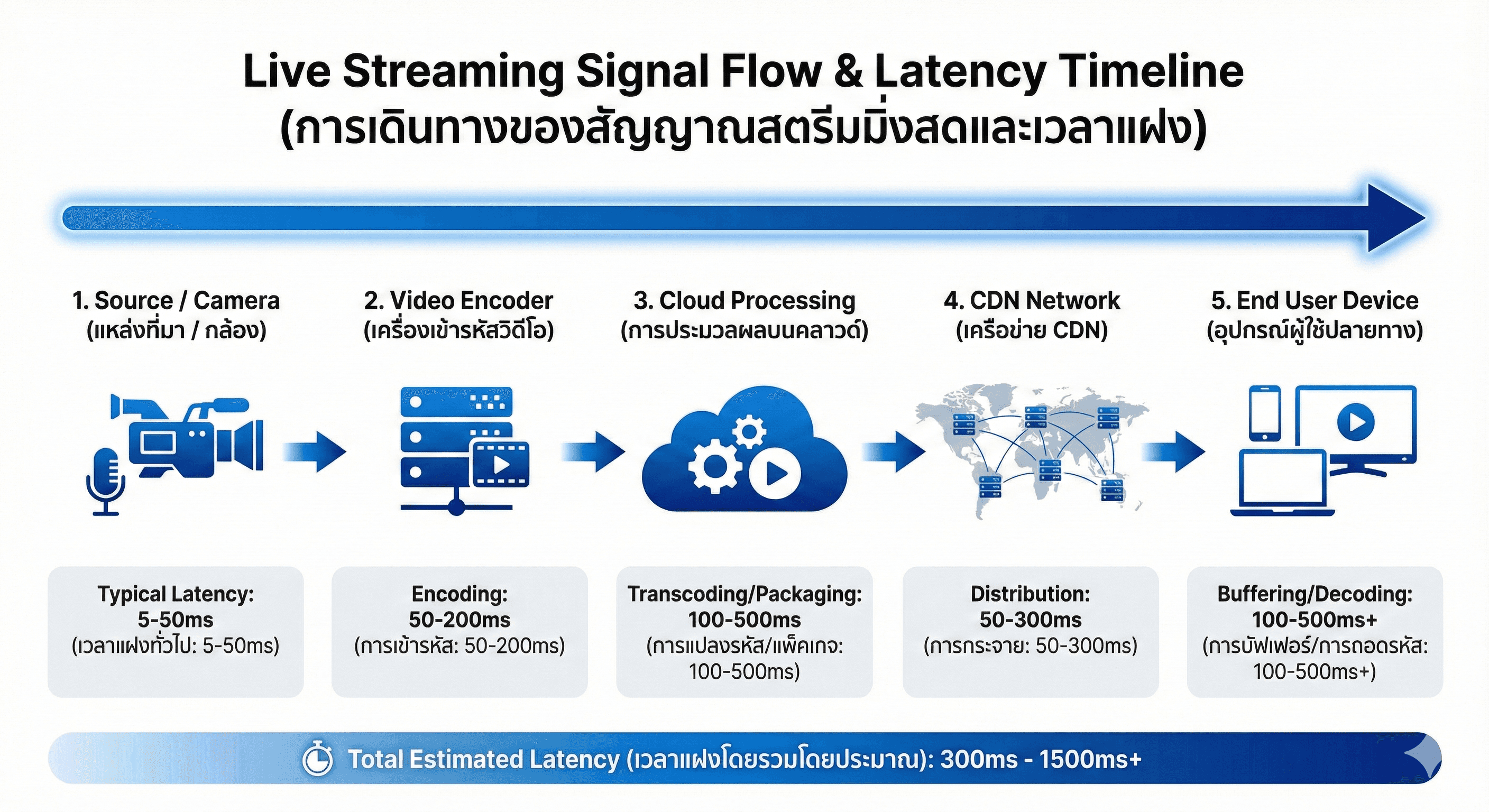
Latency หรือ ความหน่วง คือช่วงเวลาที่เกิดขึ้นระหว่างการบันทึกภาพจริงกับเวลาที่ผู้ชมเห็นภาพนั้นบนหน้าจอ ยิ่ง Latency สูง ช่องว่างระหว่างเหตุการณ์จริงกับที่ผู้ชมเห็นก็จะยิ่งมาก
[IMAGE PLACEHOLDER 1]
Suggested Visual: Timeline infographic แสดงการเดินทางของ video signal จาก camera → encoder → CDN → viewer พร้อมแสดงจุดที่เกิด latency ในแต่ละขั้นตอน
AI Prompt: "Create a horizontal timeline infographic showing live streaming signal flow from camera to viewer. Include icons for: camera/source → video encoder → cloud processing → CDN network → end user device. Mark each stage with typical latency time (ms). Use blue and white corporate colors, clean technical diagram style, arrows showing data flow, minimal text in Thai and English, professional B2B presentation quality"
ประเภทของ Live Streaming Latency: เข้าใจความแตกต่าง
การเลือกระดับ Latency ที่เหมาะสมขึ้นอยู่กับลักษณะการใช้งานของธุรกิจ เรามาทำความเข้าใจความแตกต่างกัน:
1. Traditional Latency (20-30 วินาที)
เหมาะสำหรับ: การถ่ายทอดสดทั่วไป, Webinar, การประชุม
ข้อดี: มีเสถียรภาพสูง รองรับผู้ชมจำนวนมาก
ข้อเสีย: ไม่เหมาะกับการมีปฏิสัมพันธ์แบบ Real-time
2. Low Latency (3-5 วินาที)
เหมาะสำหรับ: Live Commerce, การถ่ายทอดสดอีเวนท์, Live Q&A
ข้อดี: สามารถมีปฏิสัมพันธ์กับผู้ชมได้ดีขึ้น
ข้อเสีย: ต้องการ infrastructure ที่ดีกว่า
3. Ultra Low Latency (< 1 วินาที)
เหมาะสำหรับ: Live Betting, E-sports, การแข่งขันกีฬาสด, Live Auction
ข้อดี: การมีปฏิสัมพันธ์แบบ Real-time เหมือนอยู่ในเหตุการณ์
ข้อเสีย: ต้องการเทคโนโลยีและโครงสร้างพื้นฐานขั้นสูง
ผลกระทบของ High Latency ต่อธุรกิจ: มากกว่าแค่ภาพกระตุก
1. สูญเสีย Engagement และ Viewer Retention
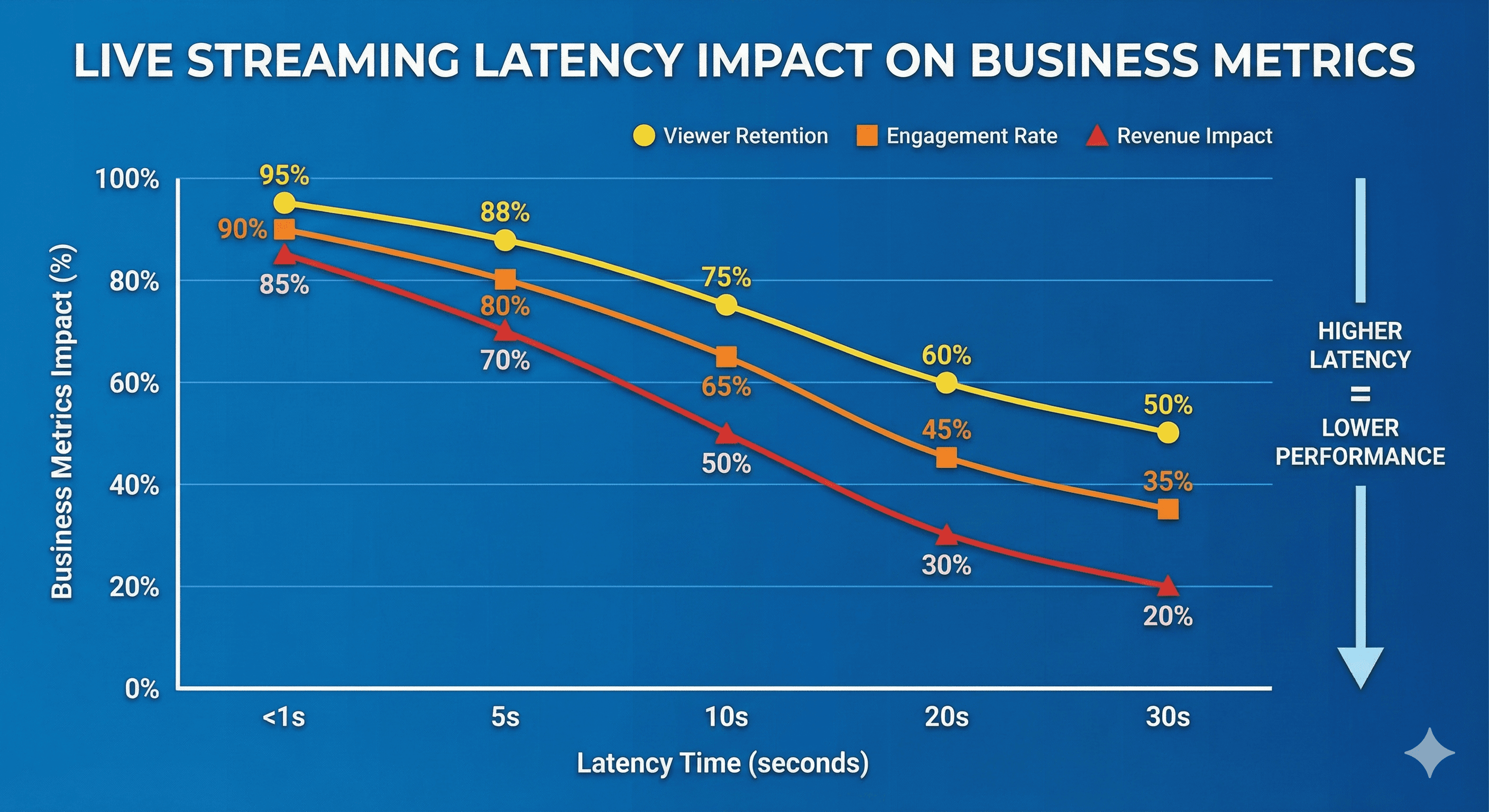
การศึกษาพบว่า ผู้ชมมีแนวโน้มออกจาก Live Stream ภายใน 90 วินาทีหากพบปัญหา buffering หรือความล่าช้าที่เห็นได้ชัด สำหรับ Live Commerce แต่ละวินาทีที่ Latency เพิ่มขึ้น สามารถลด Conversion Rate ได้ถึง 7%
2. Impact ต่อ Interactive Features
Live Chat ไม่ Sync: ผู้ชมถามคำถาม แต่คำตอบไม่ตรงกับเหตุการณ์ที่เห็น
Live Polling/Quiz: ผลโหวตออกมาก่อนผู้ชมเห็นตัวเลือก
Live Commerce: ลูกค้าสั่งซื้อสินค้าที่ขายหมดไปแล้ว
3. สูญเสียรายได้โดยตรง
Live Sports Betting: Latency 5 วินาทีทำให้ผู้เล่นเดิมพันช้ากว่าเหตุการณ์จริง อาจสูญเสียโอกาสในการเดิมพัน
Live Auction: ผู้ประมูลอาจพลาดการยื่นราคาเพราะเห็นภาพช้า
Live Commerce: Research แสดงว่า ทุก 1 วินาทีของ delay สามารถลด conversion ได้ 3-7%
[IMAGE PLACEHOLDER 2]
Suggested Visual: Impact comparison chart แสดงความสัมพันธ์ระหว่าง Latency (แกน X) กับ Business Metrics (แกน Y) เช่น Viewer Retention, Engagement Rate, Revenue
AI Prompt: "Create a professional business impact chart showing the relationship between live streaming latency and business performance. X-axis: latency time from <1s to 30s. Y-axis: percentage impact on viewer retention, engagement rate, and revenue. Use declining curve graphs in different colors (red for revenue impact, orange for engagement, yellow for retention). Include data point markers and percentage annotations. Corporate blue theme, clean data visualization style, suitable for B2B presentation"
กรณีศึกษา: ผลกระทบของ Latency ในอุตสาหกรรมต่างๆ
Live Sports Broadcasting
เมื่อผู้ชมบางส่วนเห็นเหตุการณ์เร็วกว่า (เช่น ผ่าน TV) ในขณะที่ผู้ชม Online เห็นช้ากว่า 20-30 วินาที ทำให้:
เกิด Spoiler ผ่าน Social Media
ลด Engagement บน Second Screen
กระทบต่อ Live Betting Experience
Live Commerce / E-commerce Live Streaming
ความล่าช้า 10 วินาทีในการตอบคำถามลูกค้าสามารถทำให้:
ลูกค้าตัดสินใจไม่ซื้อ
สินค้า Limited Edition ขายหมดก่อนที่ลูกค้าจะกดซื้อได้
ประสบการณ์การช้อปปิ้งไม่ดี ลด Customer Loyalty
E-sports และ Gaming Tournaments
ผู้ชมต้องการเห็นเหตุการณ์แบบ Real-time
Latency สูงทำให้สูญเสียความตื่นเต้น
กระทบต่อการสร้าง Community Engagement
เทคโนโลยีที่ช่วยลด Latency: โซลูชันสำหรับธุรกิจสื่อ
1. WebRTC (Web Real-Time Communication)
Latency: < 500 ms
เหมาะสำหรับ: Video conferencing, Interactive live streams
ข้อจำกัด: Scale ได้ไม่มากเท่า HLS/DASH
2. Low Latency HLS (LL-HLS)
Latency: 2-4 วินาที
เหมาะสำหรับ: Large scale broadcasting ที่ต้องการ low latency
ข้อดี: รองรับผู้ชมจำนวนมาก พร้อมกัน
3. CMAF (Common Media Application Format) + Chunked Transfer Encoding
Latency: 3-5 วินาที
เหมาะสำหรับ: Multi-platform delivery
ข้อดี: Compatibility สูงกับหลาย devices
[VIDEO PLACEHOLDER]
Suggested Video: Embedded YouTube video หรือ animation แสดงการเปรียบเทียบ Traditional HLS vs Low Latency HLS vs WebRTC (ถ้ามี)
Tencent Media Cloud: Low Latency Live Streaming Solution
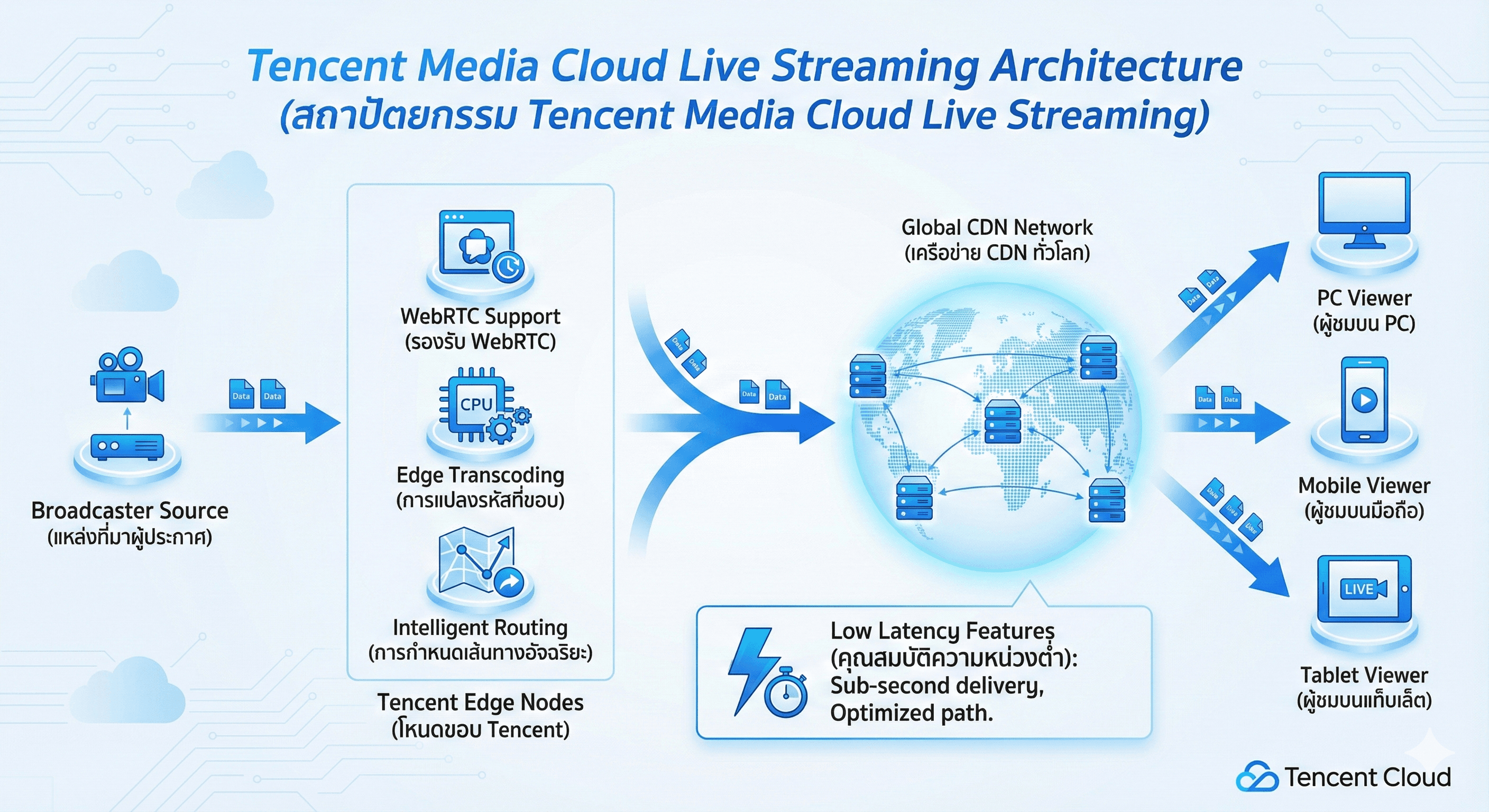
Tencent Media Cloud นำเสนอโซลูชัน Live Streaming ที่รองรับทั้ง Low Latency และ Ultra Low Latency ด้วยเทคโนโลยี:
1. Global Edge Network
CDN Nodes กระจายทั่วโลกรวมถึงในภูมิภาค Asia-Pacific
Automatic routing ไปยัง node ที่ใกล้ผู้ชมที่สุด
ลด transmission time อย่างมีนัยสำคัญ
2. Protocol Optimization
รองรับ WebRTC สำหรับ Ultra Low Latency (< 1s)
รองรับ Low Latency HLS สำหรับ Scale ขนาดใหญ่
Auto-adaptive protocol selection
3. Real-time Transcoding
Edge transcoding ลดระยะทางการส่งข้อมูล
Multiple bitrate สำหรับ Adaptive Bitrate Streaming
รักษา Quality พร้อมกับลด Latency
4. Intelligent Stream Optimization
Real-time network monitoring
Automatic quality adjustment
Packet loss recovery
[IMAGE PLACEHOLDER 3]
Suggested Visual: Architecture diagram แสดง Tencent Media Cloud Live Streaming Infrastructure พร้อม highlight low latency features
AI Prompt: "Create a technical architecture diagram showing Tencent Media Cloud live streaming infrastructure. Include: broadcaster source → Tencent edge nodes → global CDN network → viewers on multiple devices. Highlight low latency features with icons: WebRTC support, edge transcoding, intelligent routing. Use Tencent brand colors (blue theme), cloud technology aesthetic, professional network diagram style, clean and modern B2B presentation quality, minimal Thai labels for key components"
Best Practices: การเลือกระดับ Latency ที่เหมาะสมกับธุรกิจ
สำหรับ Live Commerce และ E-commerce Live Streaming:
แนะนำ: Low Latency (3-5s) หรือ Ultra Low Latency (< 1s)
เพราะ: Real-time interaction, Quick response to customer questions, Time-sensitive promotions
สำหรับ Sports Broadcasting และ E-sports:
แนะนำ: Ultra Low Latency (< 1s)
เพราะ: Real-time betting, Prevent spoilers, Maintain excitement
สำหรับ Corporate Events และ Webinars:
แนะนำ: Low Latency (3-5s)
เพราะ: Interactive Q&A, Polling, Reasonable cost-benefit ratio
สำหรับ Educational Content และ On-demand Streaming:
แนะนำ: Traditional Latency (20-30s) เพียงพอ
เพราะ: Focus on content quality และ stability
สรุป: Low Latency คือการลงทุนที่คุ้มค่าสำหรับธุรกิจสื่อ
ในยุคที่ผู้ชมคาดหวัง Real-time Experience การลงทุนในเทคโนโลยี Low Latency Live Streaming ไม่ใช่แค่การปรับปรุงทางเทคนิค แต่เป็นการปกป้องรายได้และสร้างความได้เปรียบทางการแข่งขันให้กับธุรกิจ
ไม่ว่าคุณจะดำเนินธุรกิจ Live Commerce, Sports Broadcasting, E-sports, หรือ Interactive Events การเลือกโซลูชัน Live Streaming ที่เหมาะสมสามารถส่งผลโดยตรงต่อ Viewer Engagement, Customer Satisfaction และรายได้ขององค์กร
Tencent Media Cloud มอบโซลูชัน Low Latency Live Streaming ที่ยืดหยุ่น รองรับทั้ง WebRTC สำหรับ Ultra Low Latency และ Low Latency HLS สำหรับการ Scale ขนาดใหญ่ พร้อมด้วย Global CDN Network ที่ครอบคลุมภูมิภาค Asia-Pacific
พร้อมยกระดับ Live Streaming ของคุณด้วยเทคโนโลยี Low Latency?
ปรึกษาผู้เชี่ยวชาญ Tencent Media Cloud กับ Frontyr.digital วันนี้ เพื่อประเมินความต้องการ Live Streaming และออกแบบโซลูชันที่เหมาะสมกับธุรกิจของคุณ