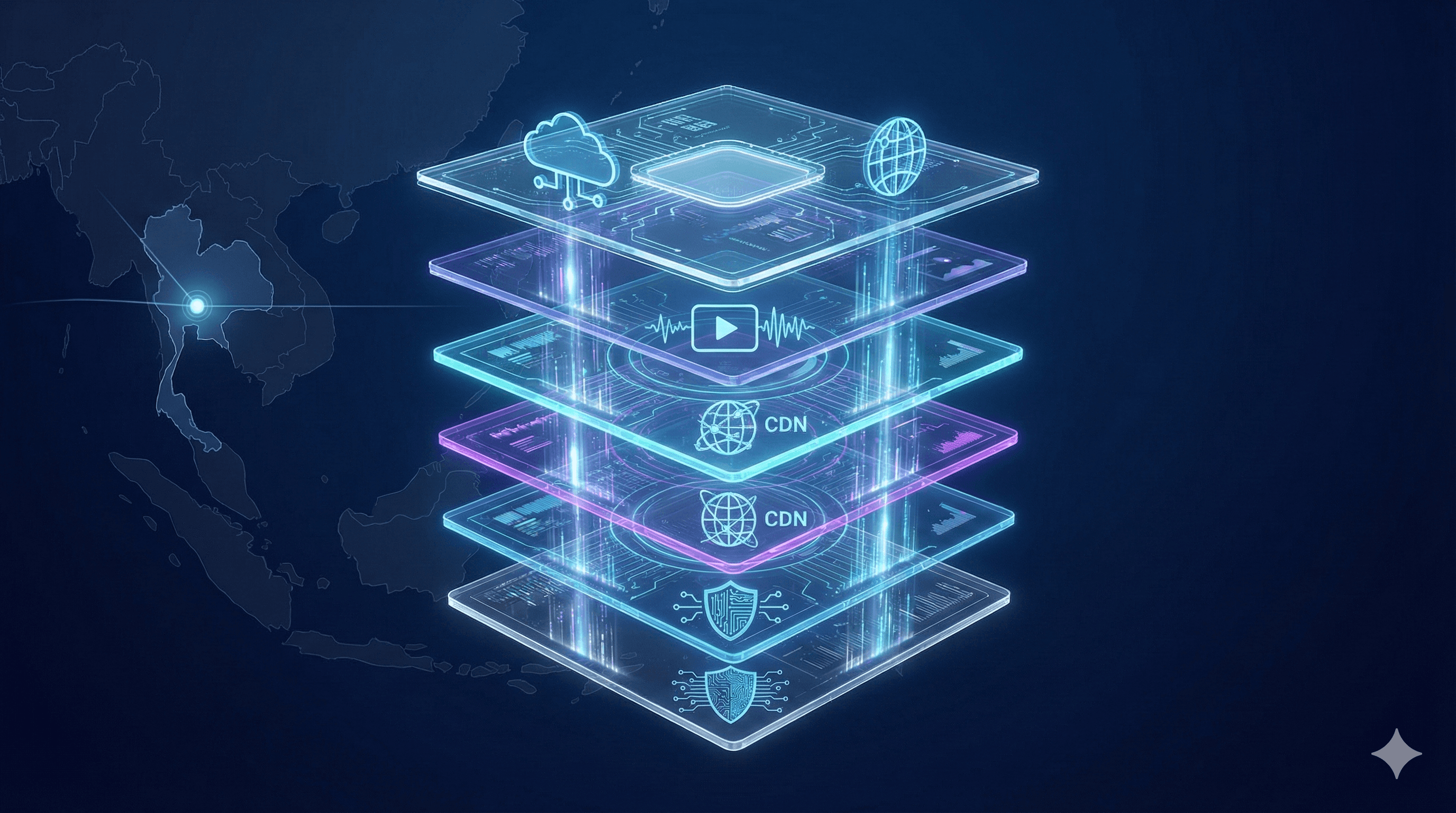
Tech Stack ที่สื่อไทยต้องมี 2026: Complete Guide สำหรับ Media Companies
วันพฤหัสบดีที่ 25 ธันวาคม พ.ศ. 2568
ธุรกิจสื่อในปี 2025 เผชิญกับความท้าทายที่ไม่เคยมีมาก่อน ผู้บริโภคคาดหวังคอนเทนต์คุณภาพสูงที่เข้าถึงได้ทุกที่ทุกเวลา การแข่งขันจาก Global Platforms อย่าง Netflix และ YouTube ทวีความรุนแรง และความคาดหวังด้าน User Experience สูงขึ้นอย่างต่อเนื่อง
สำหรับ Media Companies ในไทย การมี Tech Stack ที่เหมาะสมไม่ใช่แค่ตัวเลือก แต่เป็นความจำเป็นเพื่อความอยู่รอด
บทความนี้จะพาคุณสำรวจองค์ประกอบสำคัญของ Modern Media Tech Stack และวิธีการเลือกใช้เทคโนโลยีที่เหมาะสมกับธุรกิจของคุณ
ทำไม Traditional Infrastructure ไม่เพียงพออีกต่อไป
ในอดีต Media Companies ส่วนใหญ่พึ่งพา On-Premise Servers และ Traditional Broadcast Infrastructure แต่แนวทางนี้มีข้อจำกัดที่ชัดเจน:
ความท้าทายของ Traditional Setup:
ต้นทุนสูงในการ Scale Infrastructure
ไม่สามารถรองรับ Traffic Spike ได้อย่างมีประสิทธิภาพ
ขาดความยืดหยุ่นในการปรับเปลี่ยนตามความต้องการตลาด
Maintenance Cost สูงและต้องการทีมงาน IT ขนาดใหญ่
จำกัดความสามารถในการให้บริการ Multi-Platform
ตัวอย่างที่เห็นได้ชัด คือช่วงที่มีเหตุการณ์สำคัญ เช่น การแข่งขันกีฬาระดับโลก หรือซีรีส์ยอดนิยมที่ปล่อยตอนใหม่ ระบบ Traditional มักจะ Overload ส่งผลให้ผู้ใช้ได้รับประสบการณ์ที่ไม่ดี
[Image Placeholder 1: Comparison Infographic]
Suggested Image: Side-by-side comparison infographic ระหว่าง Traditional Media Infrastructure vs. Modern Cloud-Based Stack
AI Prompt: "Create an infographic comparing traditional on-premise media infrastructure (left side, showing physical servers, limited scalability, high costs) versus modern cloud-based infrastructure (right side, showing elastic scaling, global reach, cost efficiency). Use icons and simple charts. Professional style."
7 Core Components ของ Modern Media Tech Stack
1. Cloud Infrastructure: Foundation ของทุกอย่าง
Cloud Infrastructure คือหัวใจของ Modern Media Operation ซึ่งต้องมีความสามารถพิเศษสำหรับ Media Workloads โดยเฉพาะ:
คุณสมบัติสำคัญที่ต้องมี:
Elastic Scaling: ปรับ Resources แบบ Real-Time ตามความต้องการ
Global Presence: Data Centers กระจายอยู่ในภูมิภาคเอเชีย
Media-Optimized Services: บริการที่ออกแบบมาสำหรับ Video Workloads โดยเฉพาะ
Cost Efficiency: โครงสร้างราคาที่เหมาะสมกับ High-Bandwidth Applications
Tencent Media Cloud โดดเด่นในตลาดเอเชียด้วย:
ประสบการณ์จากการรองรับ WeChat Video, Tencent Video และ QQ Music
Data Centers ที่ครอบคลุมเอเชียตะวันออกเฉียงใต้
ระบบ CDN ที่เชื่อมต่อโดยตรงกับ ISPs ในภูมิภาค
ต้นทุน Bandwidth ที่แข่งขันได้สำหรับ High-Volume Video Traffic
สำหรับ Thai Media Companies ที่ต้องการ Serve Content ทั้งในไทยและภูมิภาคอาเซียน การเลือก Cloud Provider ที่มี Strong Presence ในเอเชียจะได้เปรียบด้าน Latency และ Cost อย่างมาก
2. Video Processing & Transcoding Pipeline
Content ยุคใหม่ต้อง Support หลากหลาย Devices และ Network Conditions การมี Video Processing Pipeline ที่มีประสิทธิภาพจึงเป็นสิ่งจำเป็น
Key Features:
Adaptive Bitrate Encoding (ABR): สร้าง Multiple Quality Versions อัตโนมัติ
Format Conversion: รองรับ HLS, DASH, และ Format อื่นๆ
AI-Powered Enhancement: ปรับปรุงคุณภาพวิดีโอด้วย AI
Thumbnail & Preview Generation: สร้าง Thumbnails และ Preview Clips อัตโนมัติ
Real-World Application:
นึกภาพว่าคุณมีไฟล์วิดีโอต้นฉบับ 4K ขนาด 50GB เมื่อ Upload เข้า Modern Transcoding Pipeline ระบบจะ:
แปลงเป็น Multiple Resolutions (4K, 1080p, 720p, 480p, 360p)
สร้าง Adaptive Bitrate Versions สำหรับแต่ละ Resolution
สร้าง Thumbnails และ Preview Clips
Optimize สำหรับ Mobile และ Web Playback
ทำทั้งหมดนี้ภายในไม่กี่นาที แทนที่จะเป็นหลายชั่วโมง
[Video Placeholder 1]
Suggested Video: Short animation (30-45 seconds) showing video transcoding process from single source file to multiple outputs
Video Description: "แสดง Visual Flow ของ Video Transcoding Process ตั้งแต่ Upload ต้นฉบับจนถึงการกระจายไปยัง Multiple Devices"
3. Content Delivery Network (CDN): ส่งมอบประสบการณ์ที่รวดเร็ว
CDN คือสิ่งที่ทำให้ผู้ชมได้รับ Content อย่างรวดเร็วไม่ว่าจะอยู่ที่ไหน
Why CDN Matters สำหรับ Media:
Reduced Latency: เนื้อหาถูก Cache ใกล้กับผู้ใช้
Bandwidth Optimization: ลด Load บน Origin Servers
Improved Reliability: Failover Protection และ Load Balancing
Cost Savings: ลดค่า Bandwidth จาก Origin Server
เลือก CDN อย่างไรให้เหมาะกับตลาดไทย:
สำหรับตลาดไทยและอาเซียน สิ่งที่ต้องพิจารณามีดังนี้:
จำนวน PoPs (Points of Presence) ในภูมิภาคเอเชียตะวันออกเฉียงใต้
Peering Agreements กับ ISPs ท้องถิ่น (True, AIS, 3BB, TOT)
Performance Metrics สำหรับ Thai Users โดยเฉพาะ
ราคา Bandwidth สำหรับ Asian Traffic
Tencent Cloud's CDN มี Advantage เรื่อง:
Direct Peering กับ Major ISPs ในไทย
Optimized Routes สำหรับ Intra-Asia Traffic
Competitive Pricing สำหรับ High-Volume Streaming
[Image Placeholder 2: CDN Network Map]
Suggested Image: Interactive-style map showing CDN coverage in Thailand and Southeast Asia with latency indicators
AI Prompt: "Create a professional network map illustration showing CDN points of presence across Southeast Asia, with Thailand highlighted. Show connection lines, latency indicators, and coverage zones. Modern, tech-focused design."
4. Content Management System (CMS) & MAM
Media Asset Management (MAM) และ CMS ที่ดีช่วยให้ทีมคุณทำงานได้อย่างมีประสิทธิภาพ
Essential Features:
Metadata Management: จัดการข้อมูล Content อย่างเป็นระบบ
Workflow Automation: Automate ขั้นตอนการผลิตและ Publishing
Version Control: ติดตาม Changes และ Revisions
Rights Management: จัดการ Rights และ Licensing
Search & Discovery: ค้นหา Assets ได้รวดเร็ว
Use Case สำหรับบริษัทสื่อไทย:
บริษัทสื่อไทยที่มีคลังคอนเทนต์หลายพันรายการ จำเป็นต้องมีระบบที่:
แท็กคอนเทนต์ด้วย Metadata (ผู้กำกับ, นักแสดง, ประเภท, สิทธิ์การออกอากาศ)
ติดตามว่า Content ไหนใกล้หมดสิทธิ์
จัดการ Multi-Language Versions และ Subtitles
Automate Publishing ไปยังหลาย Platforms
5. Analytics & Monitoring: Data-Driven Decisions
ในยุคที่ Data is King การมี Analytics Platform ที่แข็งแกร่งเป็นสิ่งจำเป็น
Key Metrics ที่ต้องติดตาม:
User Engagement: Watch Time, Completion Rate, Bounce Rate
Technical Performance: Buffering Ratio, Start Time, Error Rates
Business Metrics: Revenue per User, Churn Rate, CAC
Content Performance: Popular Content, Peak Times, Geographic Distribution
Actionable Insights จาก Analytics:
ปรับ Encoding Settings ตาม Popular Devices และ Network Conditions
วางแผน Content Release Timing ตาม Peak Usage Hours
Identify และแก้ไข Bottlenecks ในการส่งมอบคอนเทนต์
Optimize Monetization Strategy ตาม User Behavior
Real-Time Monitoring:
สำหรับ Live Streaming Events (เช่น กีฬา, คอนเสิร์ต) Real-Time Monitoring ช่วยให้:
Detect และแก้ไขปัญหาทันที
Scale Resources ตาม Actual Demand
Ensure Quality of Service สำหรับผู้ชมหลายแสนคน
6. Security & DRM: ปกป้องคอนเทนต์และผู้ใช้
Content คือทรัพย์สินที่มีค่าที่สุดของ Media Company การรักษาความปลอดภัยจึงสำคัญมาก
Multi-Layer Security Approach:
a) DRM (Digital Rights Management):
Support Standard DRMs: Widevine, FairPlay, PlayReady
Multi-DRM Solutions สำหรับ Cross-Platform Protection
License Management และ Key Rotation
b) Content Security:
Watermarking สำหรับติดตาม Content Leakage
Encryption in Transit และ at Rest
Geo-Blocking และ IP Restrictions
c) User Security:
Secure Authentication (OAuth, SSO)
Anti-Fraud Systems
Privacy Compliance (PDPA, GDPR)
Practical Example:
สำหรับ Premium Content (ซีรีส์ใหม่, ภาพยนตร์พรีเมียม) คุณควร:
ใช้ Multi-DRM Protection
Enable Forensic Watermarking
จำกัดจำนวน Concurrent Streams
Monitor สำหรับ Suspicious Download Patterns
[Image Placeholder 3: Security Layers Diagram]
Suggested Image: Layered security architecture diagram showing DRM, encryption, authentication, and monitoring
AI Prompt: "Create a professional diagram showing multiple layers of media security: DRM layer, encryption layer, authentication layer, and monitoring layer. Use shield icons and lock symbols. Clean, corporate style with blue and purple colors."
7. Monetization Platform: สร้างรายได้อย่างยั่งยืน
Tech Stack ที่สมบูรณ์ต้องรองรับหลากหลาย Monetization Models
Key Monetization Capabilities:
SVOD (Subscription Video on Demand):
Subscription Management System
Tiered Pricing และ Bundle Options
Trial Period และ Promotional Campaigns
Automated Billing และ Payment Processing
AVOD (Advertising Video on Demand):
Ad Server Integration (Google Ad Manager, etc.)
Dynamic Ad Insertion (DAI)
Programmatic Advertising Support
Ad Performance Analytics
TVOD (Transactional Video on Demand):
Pay-per-View System
Rental และ Purchase Options
Digital Wallet Integration
Hybrid Models:
Freemium Strategies
Ad-Lite Subscriptions
Premium Tier with Early Access
Modern Platforms ควรรองรับ Multiple Payment Methods ที่คนไทยใช้:
Credit/Debit Cards
Mobile Banking (PromptPay, Mobile Banking Apps)
E-Wallets (TrueMoney, Rabbit LINE Pay)
Carrier Billing (AIS, True)
หากต้องการทำความเข้าใจเพิ่มเรื่อง Monetization Strategy ทาง Frontyr Digital มีการเขียนบทความแบบเจาะลึกในเรื่องนี้ สามารถตามอ่านได้ที่บทความ Monetization Strategy สำหรับบริษัทสื่อไทย
การเลือก Tech Stack ที่เหมาะสมกับองค์กรของคุณ
ปัจจัยที่ต้องพิจารณา:
1. Content Volume & Type:
VOD vs. Live Streaming vs. Both
Short-Form vs. Long-Form Content
Number of Concurrent Viewers
2. Target Audience:
Geographic Distribution (Thailand Only vs. Regional vs. Global)
Device Preferences (Mobile-First vs. Multi-Device)
Network Conditions (Broadband vs. Mobile Data)
3. Business Model:
Monetization Strategy (SVOD, AVOD, Hybrid)
Growth Phase (Startup vs. Scaling vs. Mature)
Budget และ Resources
4. Technical Requirements:
Integration กับระบบเดิม
Customization Needs
Compliance Requirements (PDPA, Broadcast Regulations)
Decision Framework:
For Small to Medium Thai Media Companies:
เริ่มต้นด้วย Cloud-Based Solutions ที่ Managed
ใช้ SaaS Platforms สำหรับ CMS และ Analytics
Focus on Core Features ก่อน (Transcoding, CDN, Basic DRM)
Scale Up เมื่อ User Base เติบโต
For Large Media Organizations:
Build Comprehensive Stack with Advanced Features
Custom Integrations กับ Existing Broadcast Infrastructure
Advanced Analytics และ AI Capabilities
Multi-Region Deployment Strategy
Implementation Roadmap: จาก Planning สู่ Production
การสร้าง Modern Media Platform ต้องอาศัยการประสานงานของหลาย components เข้าด้วยกัน ซึ่งมีความซับซ้อนมากกว่าที่เห็น
ขั้นตอนการ Implementation แบบ Traditional
เมื่อใช้ Cloud Providers ส่วนใหญ่ คุณจะต้องเชื่อมต่อ services แต่ละตัวเข้าด้วยกันเอง:
[Image Placeholder: Architecture Comparison Diagram] Suggested Image: Split-screen comparison showing traditional multi-service architecture vs integrated solution
Left: Separate boxes (Storage → Transcoding → CDN → DRM → Analytics) with integration points between each
Right: Unified platform with components integrated AI Prompt: "Create a clean comparison diagram. Left side: flowchart showing separate cloud services (storage, transcoding, CDN, DRM, player, analytics) connected by integration arrows. Right side: single unified platform box containing all components. Neutral professional style, blue and gray colors."
[Image Placeholder: Tencent VOD vs Other Cloud Providers]
Typical Implementation Timeline:
Phase | Duration | Main Tasks |
|---|---|---|
Foundation & Setup | 1-2 เดือน | Cloud infrastructure, storage, basic security |
Video Processing | 1-2 เดือน | Transcoding pipeline, format conversion, ABR |
Distribution & Security | 1-2 เดือน | CDN configuration, DRM integration, player SDK |
Advanced Features | 1-2 เดือน | Analytics, monitoring, optional AI services |
Total | 4-6 เดือน | ก่อนพร้อม production |
ความท้าทายหลักที่พบบ่อย:
Software engineers ต้องเขียน integration code สำหรับแต่ละ service
แต่ละ service มี API และ configuration ที่แตกต่างกัน
การ maintain และ update หลาย integrations พร้อมกัน
Development cost สูงจากชั่วโมง coding, debugging, และ maintenance
ขณะที่วิธีการแบบ end-to-end solution (เช่น Tencent Cloud VOD) สามารถลด timeline และความซับซ้อนได้มาก เนื่องจากมี components ทั้งหมด รวมถึง AI capabilities อย่าง auto-tagging และ content analysis ถูก integrate ไว้ให้แล้ว ลดการเขียน code ที่ต้องทำเองลงอย่างมีนัยสำคัญ
หากต้องการเรียนรู้เพิ่มเติม Frontyr Digital มีบทความเกี่ยวข้องสำหรับบริษัทที่อยากเรียนรู้เพิ่มเติม
[VOD Implementation - Integrated solution ช่วยลดความซับซ้อนและเวลาในการพัฒนาได้อย่างไร เราจะมีบทความแยกที่อธิบายรายละเอียดของแนวทางนี้พร้อม case studies และการเปรียบเทียบต้นทุน]
Cloud Infrastructure สำหรับธุรกิจสื่อ: Tencent Cloud vs AWS vs GCP
Mistakes ที่ควรหลีกเลี่ยง
Choosing Technology Before Understanding Needs: อย่ารีบเลือก Platform เพราะมันเป็นที่นิยม เริ่มต้นด้วยการ Map Requirements ของคุณก่อน
Ignoring Total Cost of Ownership (TCO): ดูทั้งต้นทุน Setup, Operating Cost, และ Scaling Cost อย่ามองแค่ราคาเริ่มต้น
Underestimating Security Requirements: Security ไม่ใช่สิ่งที่ Add-On ภายหลัง ต้อง Build-In ตั้งแต่แรก
Not Planning for Scale: เลือก Solutions ที่ Scale ได้ แม้ว่าตอนนี้คุณจะยังเล็ก
Vendor Lock-In Without Exit Strategy: ใช้ Standard Protocols และ APIs เพื่อความยืดหยุ่นในอนาคต
อนาคตของ Media Tech Stack
Emerging Trends ที่ควรจับตา:
1. AI & Machine Learning:
Automated Content Tagging และ Metadata Generation
Personalized Recommendations
Predictive Analytics สำหรับ Content Planning
AI-Powered Video Enhancement
2. Edge Computing:
Processing ใกล้กับ Users มากขึ้น
Reduced Latency สำหรับ Interactive Content
Better Support สำหรับ AR/VR Applications
3. 5G Impact:
Higher Quality Streaming (4K, 8K)
Low-Latency Interactive Experiences
New Content Formats
4. Advanced Personalization:
Individual User Experiences
Dynamic Content Assembly
Context-Aware Delivery
สรุป: เริ่มต้นอย่างไรดี
การสร้าง Modern Media Tech Stack อาจดูซับซ้อน แต่คุณไม่จำเป็นต้องทำทุกอย่างพร้อมกัน
Quick Start Guide:
Step 1: Assess Current State
ประเมิน Infrastructure และ Capabilities ปัจจุบัน
Identify Pain Points และ Bottlenecks
กำหนด Goals และ Success Metrics
Step 2: Prioritize Components
เริ่มจาก Core Infrastructure (Cloud, Transcoding, CDN)
Add Features ตามความสำคัญและความพร้อม
Step 3: Choose the Right Partners
เลือก Technology Partners ที่มีประสบการณ์ในตลาดเอเชีย
Look for Proven Track Record และ Local Support
Consider Long-Term Partnership Potential
Step 4: Start Small, Scale Fast
Begin with Pilot Project
Learn and Iterate
Scale Based on Results
ไม่ว่าคุณจะเป็น Traditional Broadcaster ที่กำลัง Transform สู่ Digital หรือ Digital-Native Startup ที่กำลัง Scale ขึ้น การมี Tech Stack ที่เหมาะสมจะเป็นตัวกำหนดความสำเร็จของคุณในระยะยาว
ความท้าทายไม่ใช่เรื่องของเทคโนโลยีเพียงอย่างเดียว แต่เป็นเรื่องของการเลือก Solutions ที่เหมาะสมกับ Business Context, Budget และ Goals ของคุณ และที่สำคัญคือการมี Partners ที่เข้าใจตลาดไทยและภูมิภาคเอเชียอย่างแท้จริง