VOD กับ Live Streaming ใช้ Infrastructure ต่างกันอย่างไร? เจาะลึกความแตกต่างที่ Media Platform ต้องรู้
วันเสาร์ที่ 27 ธันวาคม พ.ศ. 2568
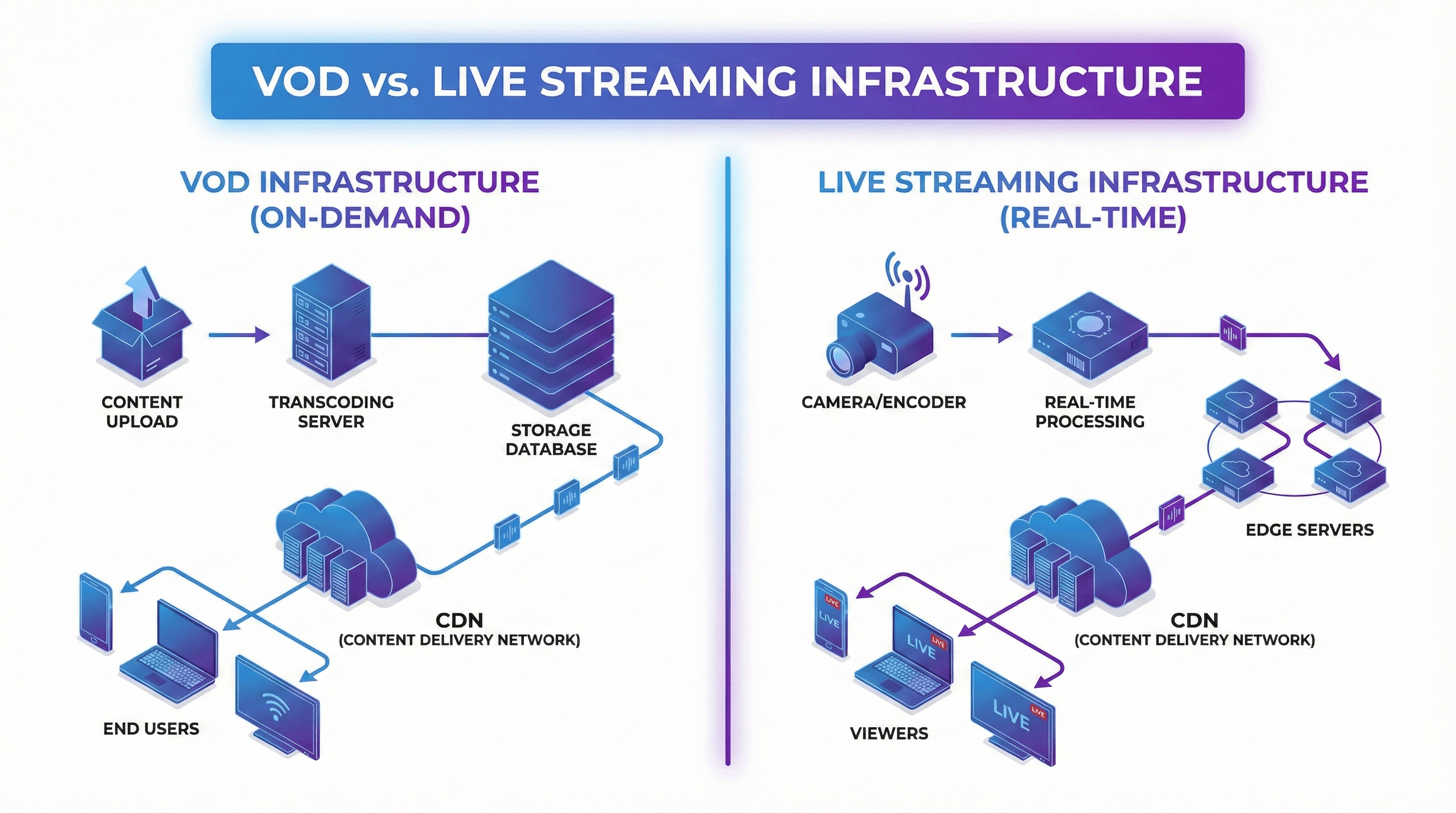
เข้าใจความต่างพื้นฐาน: VOD vs Live Streaming
สำหรับ Media Platform ที่กำลังวางแผนขยายบริการ ไม่ว่าจะเป็น OTT Platform, Streaming Service หรือ Content Creator Platform คำถามแรกที่มักเจอคือ "ควรเริ่มจาก VOD หรือ Live Streaming?" แต่ก่อนตัดสินใจ สิ่งสำคัญที่ต้องเข้าใจคือความแตกต่างของ Infrastructure ที่รองรับทั้งสองรูปแบบ
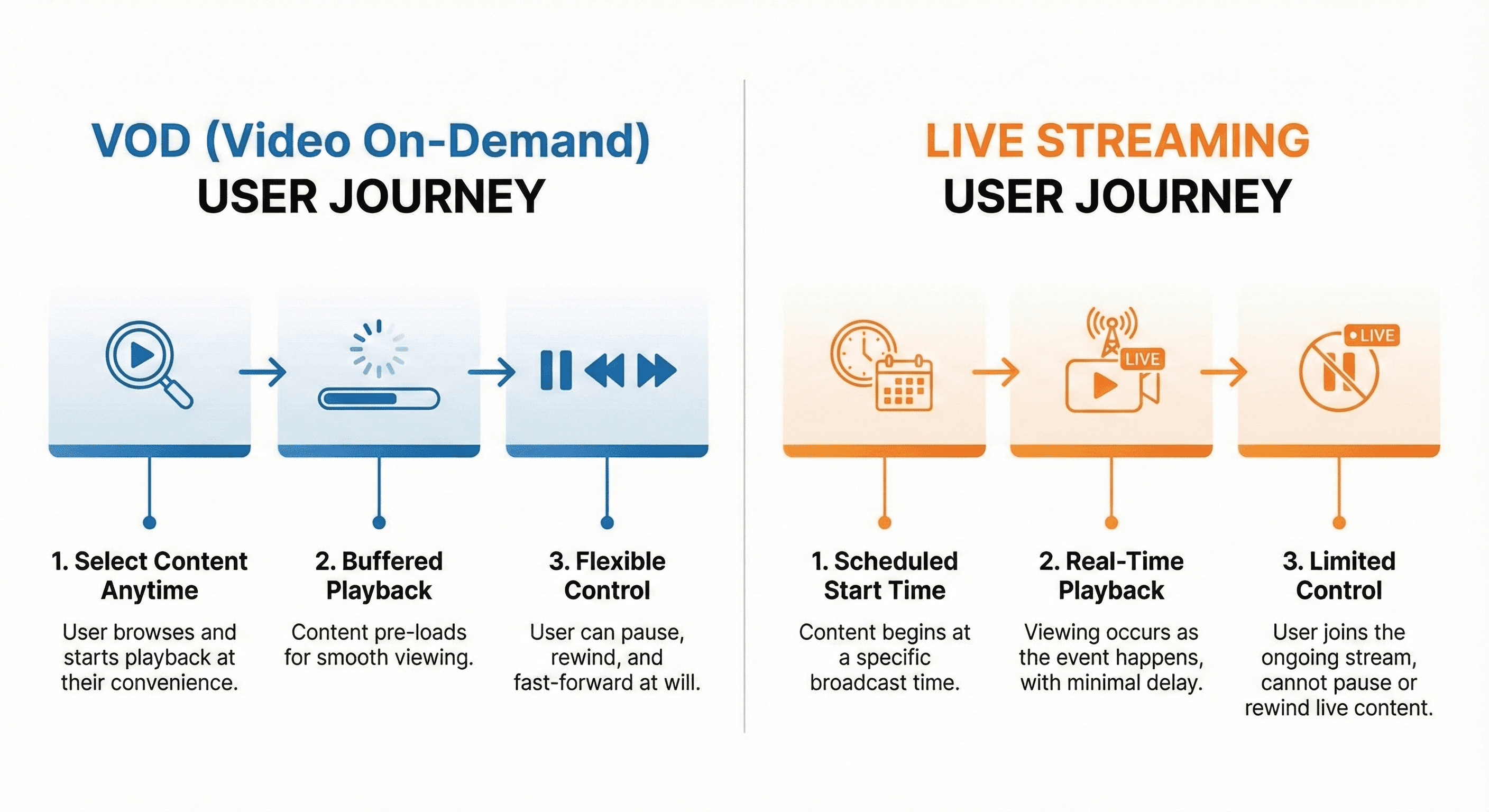
VOD (Video on Demand) คือระบบที่ผู้ใช้สามารถเลือกรับชมคอนเทนต์วิดีโอที่ผลิตและจัดเก็บไว้แล้ว เมื่อไหร่ก็ได้ที่ต้องการ เช่น Netflix, YouTube, iQIYI
ในขณะที่ Live Streaming คือการถ่ายทอดสดเนื้อหาแบบ Real-time ที่ผู้ชมต้องรับชมพร้อมกันในขณะที่กำลังเกิดขึ้น เช่น การแข่งขันกีฬา, คอนเสิร์ต, Live Commerce
ความแตกต่างพื้นฐานนี้ส่งผลโดยตรงต่อ Infrastructure Requirements ที่ต้องเตรียมการอย่างสิ้นเชิง
[รูปภาพที่ 1: วางตรงนี้]
Infographic เปรียบเทียบ User Journey ของ VOD vs Live
AI Prompt: "Create a simple comparison infographic showing user journey. VOD side: user selects content anytime → buffered playback → can pause/rewind. Live side: content starts at scheduled time → real-time playback → limited control. Use timeline visualization, minimal icons, blue and orange color coding, clean professional B2B style, white background"
1. Storage Architecture: Persistent vs Temporary
ความแตกต่างแรกและชัดเจนที่สุดคือเรื่องของ Storage Strategy
VOD Infrastructure ต้องการ Persistent Storage ขนาดใหญ่เพราะต้องเก็บวิดีโอทั้งหมดไว้ระยะยาว Content Library อาจมีหลักพัน-หลักหมื่นไฟล์ แต่ละไฟล์อาจมีหลาย Quality Versions (4K, 1080p, 720p, 480p) การวางแผน Storage Capacity กลายเป็นหัวใจสำคัญของต้นทุน
ตัวอย่างเช่น Netflix มี Content Library มากกว่า 15,000 titles ถ้าแต่ละ title เฉลี่ย 5 GB และมี 4 quality versions ก็ต้องใช้ Storage มากกว่า 300 TB เฉพาะ Original Files ยังไม่นับ Backup และ Redundancy
ในทางตรงกันข้าม Live Streaming Infrastructure ใช้ Temporary Storage เป็นหลัก เก็บเฉพาะ Live Buffer และ DVR Window (ถ้ามี) เมื่อการถ่ายทอดสดจบ ถ้าไม่มีการ Archive ก็สามารถลบ Temporary Files ได้ทันที Storage Requirement ต่ำกว่ามาก
Tencent Cloud VOD Solution รองรับ Cold Storage และ Archive Storage สำหรับคอนเทนต์ที่ไม่ได้รับชมบ่อย ช่วยลดต้นทุนได้มากถึง 80% เมื่อเทียบกับ Hot Storage แบบปกติ
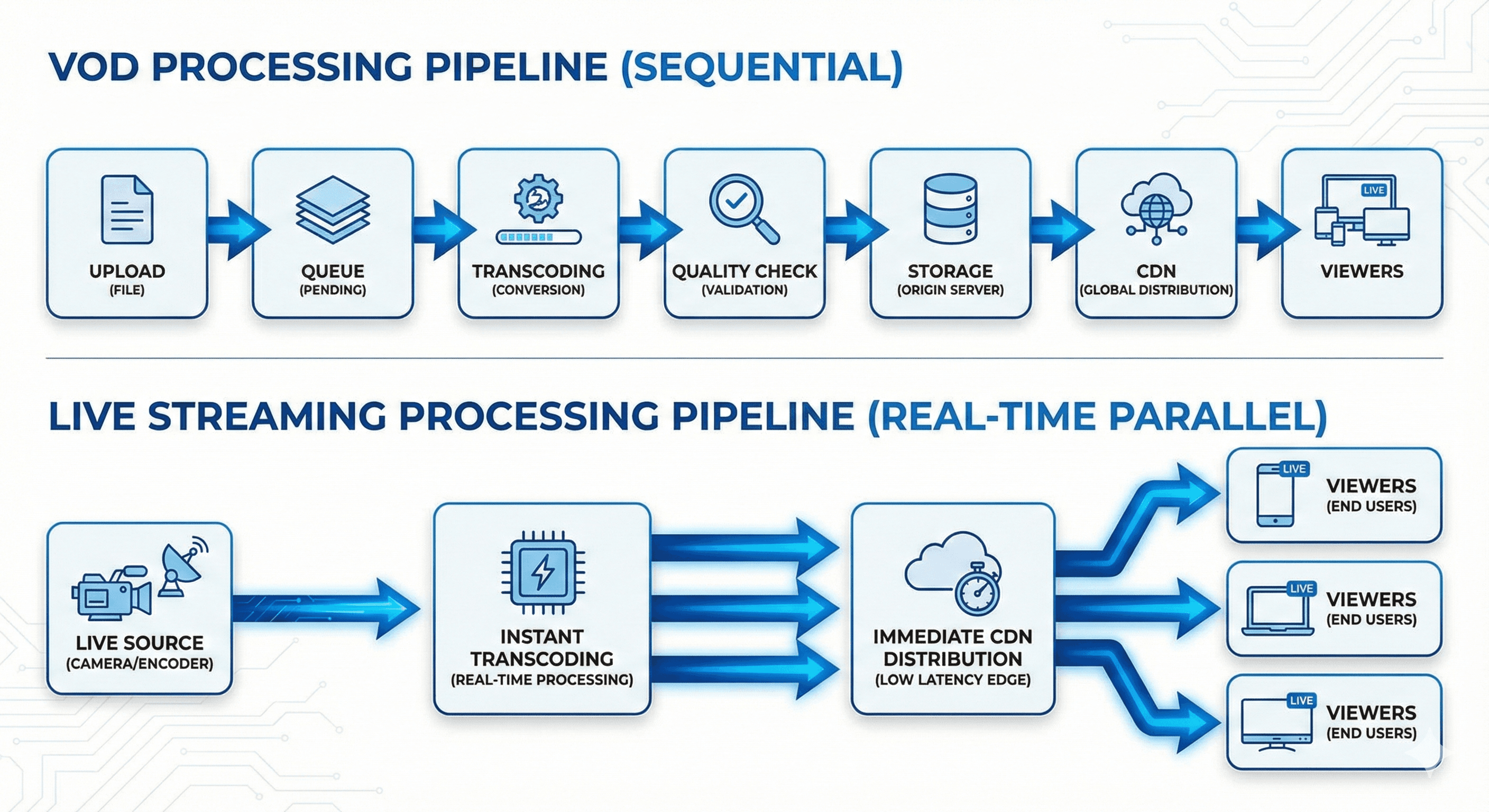
2. Processing Pipeline: Pre-processing vs Real-time
VOD Platform มีข้อได้เปรียบคือสามารถ Pre-process วิดีโอได้ก่อนเสิร์ฟให้ผู้ใช้ ทำให้สามารถ:
Transcoding ล่วงหน้าเป็นหลาย Bitrate และ Resolution
Optimize คุณภาพวิดีโอด้วย AI Enhancement
Generate Thumbnail และ Preview Clips
Add Subtitle และ Multiple Audio Tracks
Insert Advertisement Markers
Apply Watermark และ DRM Protection
กระบวนการเหล่านี้อาจใช้เวลาหลายชั่วโมง แต่ไม่มีปัญหาเพราะไม่ต้องทำ Real-time
Live Streaming ต้องทำทุกอย่างแบบ Real-time ภายในเสี้ยววินาที:
Real-time Transcoding หลาย Bitrate พร้อมกัน (ABR - Adaptive Bitrate)
Low-latency Processing เพื่อให้ Delay น้อยที่สุด
Real-time Content Moderation (ถ้าจำเป็น)
Live DVR สำหรับ Time-shift Viewing
Dynamic Ad Insertion ระหว่างถ่ายทอดสด
ความท้าทายคือต้องประมวลผลเร็วพอที่จะไม่สร้าง Latency แต่ก็ดีพอที่จะให้คุณภาพภาพและเสียงที่ยอมรับได้
[รูปภาพที่ 2: วางตรงนี้]
Diagram แสดง Processing Pipeline ของทั้ง 2 แบบ
AI Prompt: "Create a technical workflow diagram showing two processing pipelines. Top: VOD pipeline with sequential steps (upload → queue → transcoding → quality check → storage → CDN). Bottom: Live pipeline with parallel real-time processing (live source → instant transcoding → immediate CDN distribution → viewers). Use flow chart style, technical blue color scheme, arrows showing data flow, clean professional design for B2B audience"
3. CDN Strategy: Pre-caching vs Edge Distribution
Content Delivery Network (CDN) มีบทบาทสำคัญต่างกันในทั้งสอง Use Case
VOD Platform สามารถใช้ Pre-caching Strategy:
Popular Content สามารถ Cache ไว้ที่ Edge Server ทั่วโลกล่วงหน้า
Cache Hit Rate สูงมาก (มักเกิน 90%) เพราะคนหลายคนดูคอนเทนต์เดียวกัน
Origin Server Load ต่ำ เพราะส่วนใหญ่ Serve จาก Cache
Bandwidth Cost ประหยัดเพราะ Origin ไม่ต้อง Serve ซ้ำๆ
Live Streaming ต้องใช้ Edge Distribution แบบ Real-time:
Content ยังไม่มี จึง Cache ล่วงหน้าไม่ได้
ต้องอาศัย Edge Servers ที่กระจายใกล้ผู้ใช้เพื่อลด Latency
Origin Load สูงมาก โดยเฉพาะช่วง Peak (เช่นเกมฟุตบอลสำคัญ)
ต้องมี Scalability ที่รองรับ Concurrent Viewers หลักแสน-หลักล้าน
Tencent Media Cloud มี Edge Node มากกว่า 2,800+ จุดทั่วโลก รองรับทั้ง VOD Caching และ Live Edge Distribution ด้วย Network Bandwidth รวมกว่า 200 Tbps ช่วยให้ Media Platform ในไทยสามารถ Deliver Content ไปยังผู้ใช้ในเอเชียแปซิฟิกได้อย่างมีประสิทธิภาพ
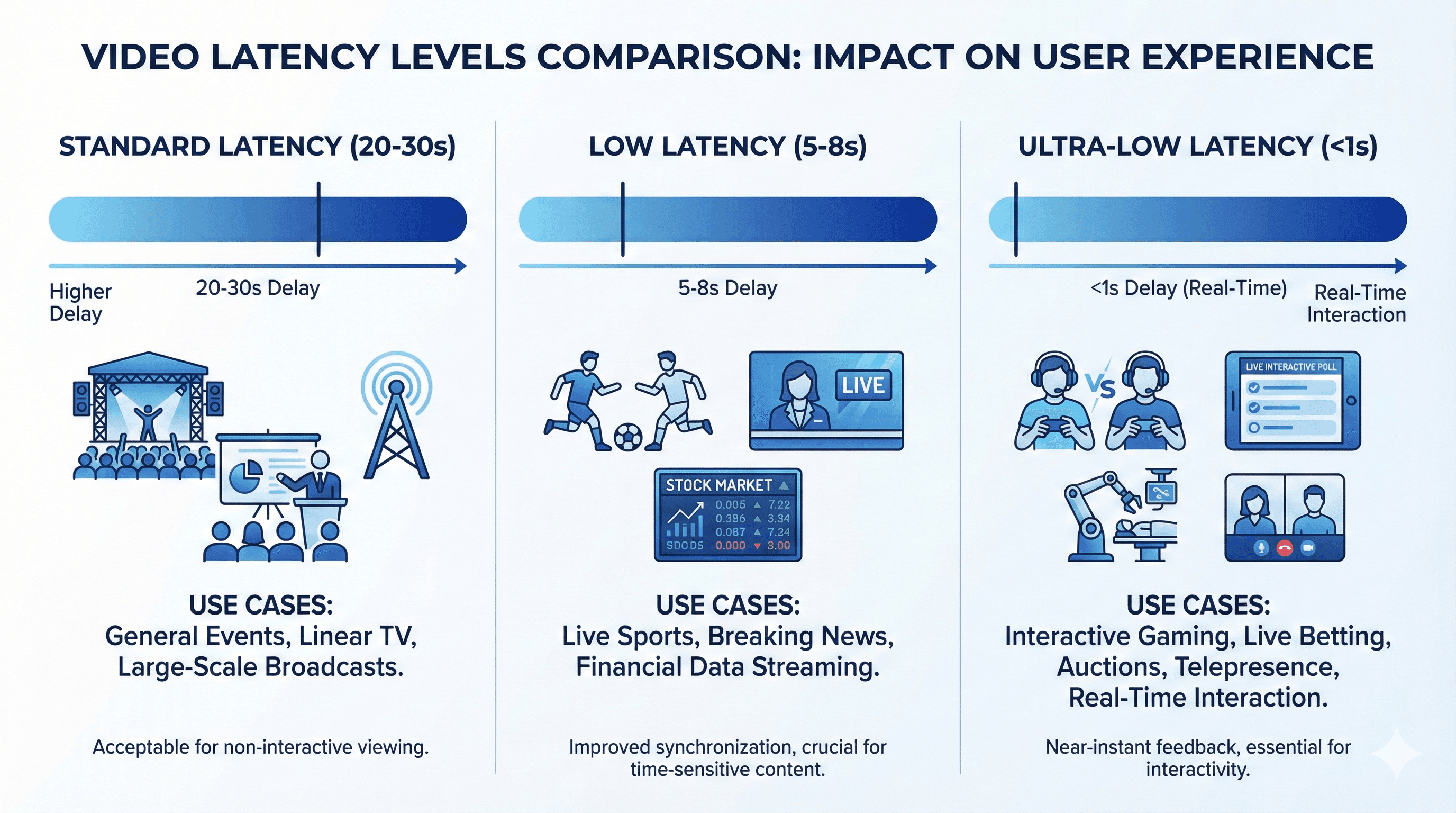
4. Latency Requirements: Flexible vs Critical
VOD มีความยืดหยุ่นสูงเรื่อง Latency:
ผู้ใช้กด Play แล้วรอ 2-3 วินาทีก่อน Buffer ได้
สามารถใช้ Larger Buffer Size (10-30 วินาที) เพื่อ Smooth Playback
Rebuffering น่ารำคาญ แต่ไม่ Critical
Live Streaming Latency เป็นเรื่อง Mission-critical:
Standard Latency (20-30 วินาที): ยอมรับได้สำหรับ General Live Events
Low Latency (5-8 วินาที): สำคัญสำหรับ Live Sports, News
Ultra-low Latency (ต่ำกว่า 1 วินาที): จำเป็นสำหรับ Interactive Live (Live Commerce, Gaming, Auction)
ยิ่งต้องการ Latency ต่ำ ยิ่งต้องเทรดออฟกับ Stability และ Scalability
Tencent Cloud Live รองรับทั้ง RTMP, WebRTC (Ultra-low Latency), และ HLS (Standard) ให้เลือกใช้ตาม Use Case
[รูปภาพที่ 3: วางตรงนี้]
Chart เปรียบเทียบ Latency Levels
AI Prompt: "Create a horizontal comparison chart showing latency levels. Three columns: Standard Latency (20-30s) for general events, Low Latency (5-8s) for sports/news with icons, Ultra-low Latency (<1s) for interactive content. Use gradient bars to show latency ranges, include use case icons, professional blue gradient design, clean B2B infographic style"
5. Scalability Patterns: Predictable vs Unpredictable
VOD Traffic มักมีรูปแบบที่ ค่อนข้าง Predictable:
Traffic กระจายตลอดวัน
Peak อาจเกิดช่วงเย็น-ดึก (Prime Time)
สามารถ Pre-scale Infrastructure ตาม Historical Data
Auto-scaling ทำงานได้ดีเพราะมี Buffer Time
Live Streaming Traffic แบบ Spike ที่รุนแรง:
Traffic อาจพุ่งจาก 0 เป็น 1 ล้าน Concurrent Viewers ภายในไม่กี่นาที
ไม่สามารถ Predict ได้เสมอ (Breaking News, Viral Events)
ต้อง Instant Scalability โดยไม่มี Warm-up Time
ถ้า Scale ไม่ทัน = Service Crash = Lost Viewers
ตัวอย่างจริง: เมื่อ LINE BK ประกาศ Shutdown Live Commerce Platform หนึ่งในปัญหาคือ ไม่สามารถ Handle Traffic Spike ในช่วง Flash Sale ของ Top Sellers ที่มี Viewer หลักแสนคนพร้อมกัน
Tencent Cloud Auto-scaling สามารถ Scale ขึ้น-ลงอัตโนมัติภายใน 30 วินาที รองรับการเพิ่ม Concurrent Viewers ได้หลักล้านคนโดยไม่ต้อง Manual Intervention
6. Cost Structure: Storage-heavy vs Bandwidth-heavy
โครงสร้างต้นทุนต่างกันอย่างชัดเจน:
VOD Cost Components:
Storage Cost (40-50%): เก็บ Content Library ขนาดใหญ่
Transcoding Cost (20-30%): Process วิดีโอหลาย Version
CDN Bandwidth (20-30%): Deliver Content
Processing (5-10%): AI, Thumbnail, etc.
Live Streaming Cost Components:
Real-time Transcoding (40-50%): Process หลาย Bitrate พร้อมกัน
Bandwidth Cost (35-45%): Peak Bandwidth สูงมาก
Edge Infrastructure (10-15%): Maintain Edge Servers
Storage (5-10%): เฉพาะ DVR/Archive
Key Insight: VOD เน้น Optimize Storage, Live เน้น Optimize Bandwidth และ Processing Power
7. Technical Architecture: แตกต่างตั้งแต่ Core
VOD Architecture เน้น Asynchronous Processing:
<br>Upload → Transcode Queue → Multi-quality Encoding → <br>Storage → CDN Distribution → Playback<br>
สามารถใช้ Batch Processing, Queue System, Delayed Jobs ได้อย่างมีประสิทธิภาพ
Live Architecture เป็น Synchronous Real-time Pipeline:
<br>Live Source → Instant Encoding → Edge Distribution → <br>Immediate Delivery → Live Playback<br>
ทุก Component ต้องทำงาน Real-time และ Fault-tolerant สูง
[รูปภาพที่ 4: วางตรงนี้]
Architecture Diagram เปรียบเทียบ
AI Prompt: "Create a technical architecture comparison diagram. Top: VOD architecture showing asynchronous flow with queue systems, batch processing, large storage databases. Bottom: Live architecture showing synchronous real-time pipeline with instant processing, edge servers, minimal storage. Use system architecture diagram style, blue and purple color scheme, clean professional technical illustration for B2B"

เลือก Infrastructure ให้ตรงกับ Business Model
ถ้าคุณเป็น OTT Platform ที่มี Content Library ขนาดใหญ่:
✓ เน้น VOD Infrastructure
✓ ลงทุนใน Storage Optimization
✓ ใช้ AI-powered Transcoding สำหรับ Quality
✓ เพิ่ม Live Capability เป็น Add-on (สำหรับ Premiere, Special Events)
ถ้าคุณเป็น Live Commerce Platform:
✓ เน้น Live Streaming Infrastructure
✓ ลงทุนใน Low-latency Solution
✓ Scalability สำหรับ Flash Sale
✓ เพิ่ม VOD เป็น Replay Feature
ถ้าคุณเป็น Hybrid Platform (เช่น YouTube, iQIYI):
✓ ต้อง Design Infrastructure ที่รองรับทั้งสอง
✓ แยก Resource Pool สำหรับ VOD และ Live
✓ Unified CDN แต่ Separate Origin
Tencent Media Cloud: Solutions ที่รองรับทั้ง VOD และ Live
ข้อดีของ Tencent Cloud VOD + Live คือเป็น Integrated Platform ที่ออกแบบมาให้ทำงานร่วมกันได้อย่างลงตัว:
Unified Console: จัดการทั้ง VOD และ Live ในที่เดียว
Shared CDN: ใช้ Edge Network เดียวกัน ประหยัดต้นทุน
Seamless Integration: Live สามารถ Auto-convert เป็น VOD หลังจบการถ่ายทอด
Single API: Developers ไม่ต้องเรียนรู้ 2 ระบบ
Unified Analytics: Dashboard เดียวครอบคลุมทั้ง VOD และ Live Metrics
สำหรับ Media Platform ในไทยที่ต้องการความยืดหยุ่นในการให้บริการทั้ง On-demand และ Live Content การเลือก Cloud Provider ที่มี Strong Offering ทั้งสองด้านจึงเป็นเรื่องสำคัญ
สรุป: เข้าใจความต่าง วางแผนได้ถูก ประหยัดต้นทุนได้จริง
VOD และ Live Streaming ไม่ได้เป็นแค่ "วิดีโอสองรูปแบบ" แต่เป็น สองโลกของ Infrastructure ที่ต่างกันตั้งแต่ Core Architecture ไปจนถึง Cost Model
การเข้าใจความแตกต่างเหล่านี้จะช่วยให้:
✓ วางแผน Infrastructure ที่เหมาะสมกับ Business Model
✓ คาดการณ์ต้นทุนได้แม่นยำขึ้น
✓ เลือก Cloud Solution ที่ตอบโจทย์จริง
✓ Avoid Over-engineering หรือ Under-provisioning
ไม่มีคำตอบที่ถูกหรือผิดว่าควรเลือก VOD หรือ Live ทุกอย่างขึ้นอยู่กับ Business Needs และ User Behavior ของคุณ แต่การเริ่มต้นด้วยความเข้าใจที่ถูกต้องจะทำให้การตัดสินใจของคุณมั่นใจและแม่นยำมากขึ้น
กำลังวางแผน Video Platform แต่ยังไม่แน่ใจว่า Infrastructure ที่เหมาะสมคืออะไร?
Frontyr.digital พร้อมให้คำปรึกษาฟรีเกี่ยวกับการออกแบบ VOD และ Live Streaming Infrastructure ที่เหมาะกับ Business Model ของคุณ ด้วยประสบการณ์ในการ Implement Tencent Media Cloud - Cloud Platform ที่รองรับทั้ง VOD และ Live ในระบบเดียว